


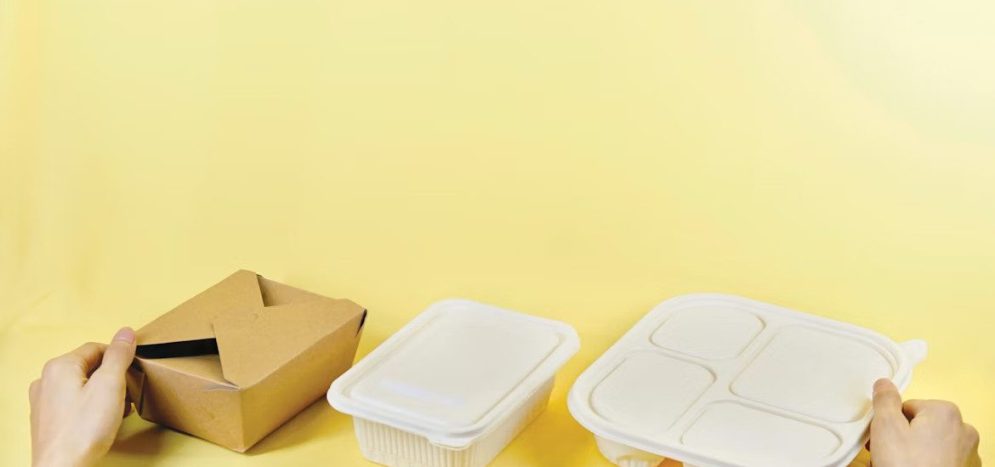
In recent years, paper food trays have made a decisive entry into the food packaging market, becoming one of the most concrete alternatives to traditional plastic. From fresh fish to dairy products, from meat to ready meals: paper packaging is establishing itself as a sustainable, functional and visually appealing solution.
But what makes paper trays truly suited to the food industry? And which packaging technologies are needed to process them at their best?
The advantages of paper packaging
Paper trays offer a series of concrete benefits compared with traditional plastic packaging:
- Reduced environmental impact: they are made from renewable materials and are compostable or recyclable with paper, significantly reducing the carbon footprint of the packaging.
- Regulatory compliance: they are already aligned with the requirements of the new European PPWR Regulation, which aims to progressively phase out non-recyclable packaging by 2030.
- Versatility: available in different formats and thicknesses, they are suitable for fresh, chilled and even frozen products when combined with the right inner coatings.
- Consumer perception: paper packaging is associated with quality, craftsmanship and respect for the environment — an important added value in brand communication.
Technical challenges not to be underestimated
Processing paper trays requires specific machinery and different settings compared with plastic packaging. The main technical aspects are:
- Sealing and tightness: paper requires different sealing parameters (temperature, pressure, time) to ensure a secure hermetic seal, which is essential for foods in a modified atmosphere (MAP) or under vacuum.
- Dimensional stability: unlike plastic, paper is more sensitive to moisture; it is therefore necessary to choose materials with barrier coatings suited to the product category.
- Production speed: lines must be calibrated to maintain high production rates without compromising the integrity of the packaging.
The technological solutions available
Latest-generation tray sealers such as those from Subba’s partners make it possible to process paper trays with the same efficiency as traditional plastic lines. Modern machines feature:
- Automatic sealing-parameter adjustment systems based on the material
- Compatibility with recyclable mono-material films for sealing
- Quick format changeover to maximise production flexibility
The result is a packaging line that is sustainable, efficient and fully compliant with current regulations — and with those that will come into force in the coming years.
Want to assess whether paper trays are the right solution for your company? Subba offers a free consultation to analyse your production lines and identify the most suitable technology.